


What Is Non-Coding DNA and Why Does It Matter?

Only a tiny slice of the human genome directly codes for proteins. The rest, once dismissed as “junk DNA,” is now one of the most active areas of modern biology.
In humans, about 98% to 99% of DNA is non-coding, meaning it does not contain instructions for making proteins. That number surprises people because genes are often described as the main story of heredity. Genes matter deeply, but they are not the whole book. Much of the genome helps decide when, where, and how strongly genes are used.
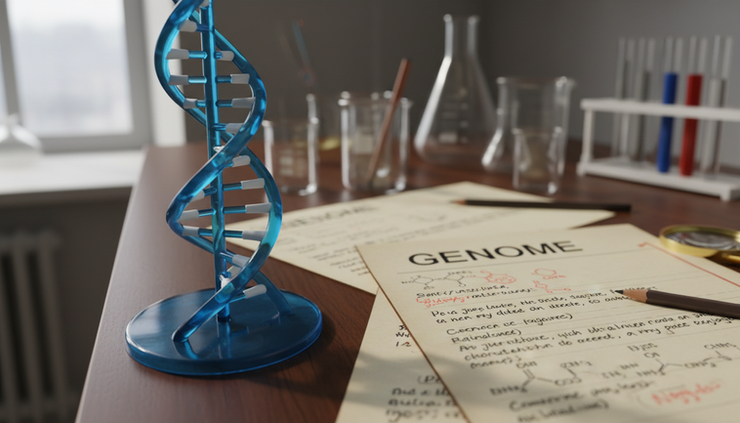
What non-coding DNA means
Protein-coding DNA contains instructions for building proteins, the working molecules that help form tissues, run chemical reactions, and support cell function.
Non-coding DNA refers to the parts of the genome that do not become proteins. Some of it is copied into RNA molecules that do useful work. Some helps control nearby or distant genes. Some forms structural regions of chromosomes. Some consists of repeated sequences, including remnants of ancient viruses and mobile genetic elements.
The old phrase “junk DNA” came from a time when scientists had fewer tools to study the genome. Today, researchers know that some non-coding regions have clear biological roles. Other regions may have subtle functions, functions only in certain cells, or no current known function. The honest answer is balanced: not all non-coding sequence is essential, but much more of it matters than scientists once thought.
What percentage of our DNA is non-coding
The human genome has roughly 3 billion base pairs. Only about 1% to 2% codes for proteins. That leaves about 98% to 99% as non-coding sequence.
This does not mean 98% of the genome is doing something important all the time. Different regions vary widely. A nerve cell, liver cell, and immune cell carry almost the same genome, but they use different parts of it. Non-coding regions help make that possible.
A useful way to think about it is this:
Protein-coding DNA
Non-coding DNA
Provides recipes for proteins
Helps regulate, organize, and protect, the genome

What non-coding DNA does
Non-coding regions have several known functions. Some are central to life, development, and disease risk.
It controls gene activity
Many non-coding sequences act like switches and dials. They can turn genes on or off, boost gene activity, reduce it, or limit it to certain tissues.
Key regulatory elements include:
Promoters These sit near genes and help start gene reading.
Enhancers These can work from far away in the genome and increase gene activity in specific cells.
Silencers These reduce or block gene activity.
Insulators These help keep one gene’s control system from interfering with another.
This regulation is one reason a skin cell behaves like a skin cell and a brain cell behaves like a brain cell, even though they carry the same DNA.
It produces useful RNA molecules
Some non-coding regions are transcribed into RNA that never becomes protein. These RNA molecules can still do important work.
Examples include:
Transfer RNA Helps build proteins by carrying amino acids.
Ribosomal RNA Forms core parts of ribosomes, where proteins are made.
MicroRNA Helps fine-tune gene activity by affecting messenger RNA.
Long non-coding RNA Can influence gene regulation, chromosome structure, and cell identity.
These molecules show that “non-coding” does not mean “inactive.” It simply means the sequence does not code for a protein.
It supports chromosome structure
Some non-coding DNA helps maintain the physical structure of chromosomes. Two well-known examples are telomeres and centromeres.
Telomeres protect chromosome ends, a bit like caps on shoelaces. Centromeres help chromosomes separate properly when cells divide. Without these structures, cells would struggle to copy and pass on genetic information accurately.

It is a source of genetic variation
A large part of the non-coding genome includes repeated sequences and mobile genetic elements, often called transposons and retrotransposons. Some can copy or move within the genome and create new regulatory patterns or repurpose sequences for new functions. Although there are no active transposons in humans today, many retrotransposons are still active and some play a role in cancer.
Why it matters for health and disease
Many genetic variants linked to disease are not in protein-coding genes. They often sit in regulatory regions. That makes sense. A disease risk variant may not change the structure of a protein. Instead, it may change how much of that protein is made, when it is made, or where it is made.
This has major implications for DNA, gene therapy, genetics, and molecular biology. If a harmful variant lies in a non-coding control region, treatment may require more than replacing or editing a protein-coding gene. Scientists may need to understand the whole regulatory network around it.
This is especially relevant for complex conditions such as autoimmune disease, heart disease, diabetes, and some cancers. These conditions often involve many variants, each with a small effect. Non-coding regions may help explain why risk differs between people and why the same mutation can have different results in different tissues.
What the future could make possible
Better knowledge of non-coding regions could change how scientists diagnose, treat, and prevent disease.
Possible future uses include:
More accurate genetic risk prediction If scientists can interpret non-coding variants better, genetic tests may become more useful and less uncertain.
Safer gene editing Editing a gene without understanding its regulatory controls can have unwanted effects. Mapping non-coding elements may help researchers avoid disrupting important switches.
New therapeutic targets Some treatments may aim to adjust gene activity rather than change a protein directly.
Better understanding of development Non-coding regions help guide how a single fertilized egg becomes many specialized cell types.
Personalized treatment choices In time, non-coding variants may help explain why people respond differently to the same drug.

The challenge is scale. The non-coding genome is huge, and function often depends on cell type, timing, environment, and three-dimensional genome folding. A sequence may matter in an embryo but not in an adult. It may matter in immune cells but not in muscle cells.
The takeaway
Non-coding DNA is not genetic filler. It makes up nearly all of the human genome, and parts of it control genes, produce important RNA molecules, protect chromosomes, and shape genetic variation.
The big promise is interpretation. As scientists learn to read the non-coding genome, they may uncover better explanations for disease risk, new ways to guide gene therapy, and a clearer picture of what makes human biology work. The code for proteins is only one layer. The instructions for using that code may be just as important.


Comments